Exhibition
When Evening Has Passed and Tomorrow Comes
Jiyoun Lee-Lodge: Mindscape | Jiyoun Lee-Lodge: Paisaje Mental
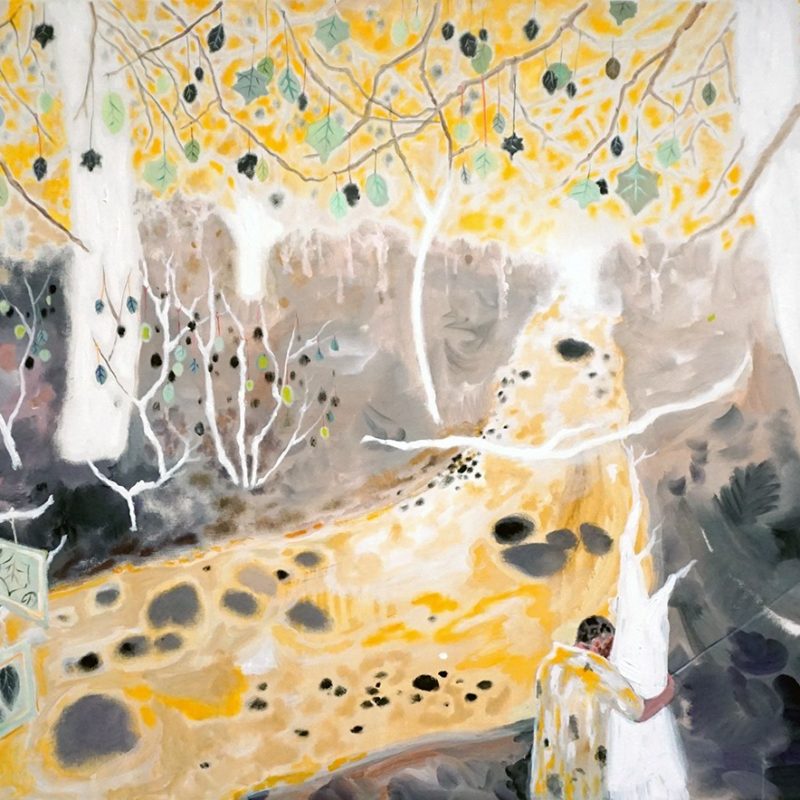
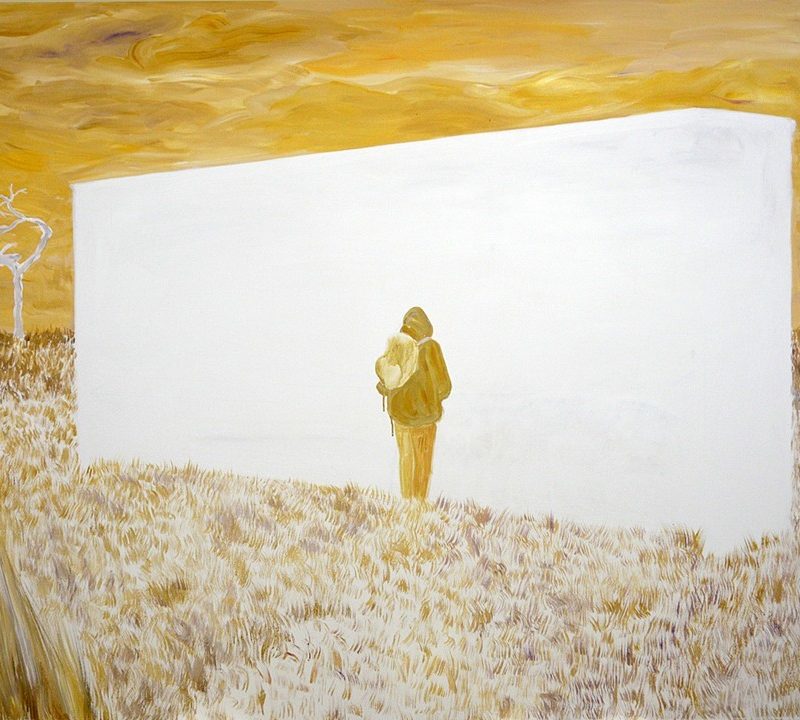
Jiyoun Lee-Lodge describes herself as “a self-exiled Asian, woman, mother, and social media addict.” She is a recent transplant from New York, and her work in the Waterman the Stranger series describes her experience as a new Utahn. Struggling to settle in a place that looks and feels so different from the jungle of skyscrapers that she knew, she asked herself, “If I mimic what an ideal life looks like here, will I blend in well?” In each piece, she illustrates herself as shifting water that repels, absorbs, reflects, and fails, showing the figure’s struggle (her own struggle) to find a place.
Lee-Lodge’s Waterman the Stranger series is paired with an earlier body of work called Mindscape, which the artist describes as portraits of her senses—touch, sight, smell, and so on—frozen in time. Influenced by infographics, animations and hieroglyphs, her work as a whole explores how identity is constantly in flux.
Jiyoun Lee-Lodge is a Korean-born, Salt Lake City-based artist. She recently won best in show at the 2019 Statewide Annual Mixed Media & Works on Paper Exhibition.
Jiyoun Lee-Lodge: Paisaje Mental
Jiyoun Lee-Lodge se describe a sí misma como “una autoexiliada asiática, mujer, madre y adicta a las redes sociales.” Ella es un trasplante reciente de Nueva York, y su trabajo en la serie Waterman the Stranger (Waterman el Forastero) describe su experiencia como una nueva Utahn. Luchando por establecerse en un lugar que se ve y se siente tan diferente de la selva de rascacielos que conocía, se preguntó: “Si imito cómo es una vida ideal aquí, ¿memezclaré bien?” En cada pieza, se ilustra a sí misma como agua en movimiento que repele, absorbe, refleja y falla, mostrando la lucha de la figura (su propia lucha) para encontrar un lugar.
La serie Waterman the Stranger de Lee-Lodge se combina con un cuerpo de trabajo anterior llamado Mindscape, que la artista describe como retratos de sus emociones y sentidos (tacto, vista, olfato, etc.) congelados en el tiempo. Influenciada por infografías, animaciones y jeroglíficos, su trabajo en su conjunto explora cómo la identidad está en constante cambio.
Jiyoun Lee-Lodge es una artista nacida en Corea, con sede en Salt Lake City. Recientemente ganó el mejor espectáculo en la Exposición Anual de Medios Mixtos y Obras en Papel en todo el Estado de 2019.
Xi Zhang: Dream Dust Milkshake | Xi Zhang: Un batido de polvo de sueños
Virtual Tour
visita virtual en español
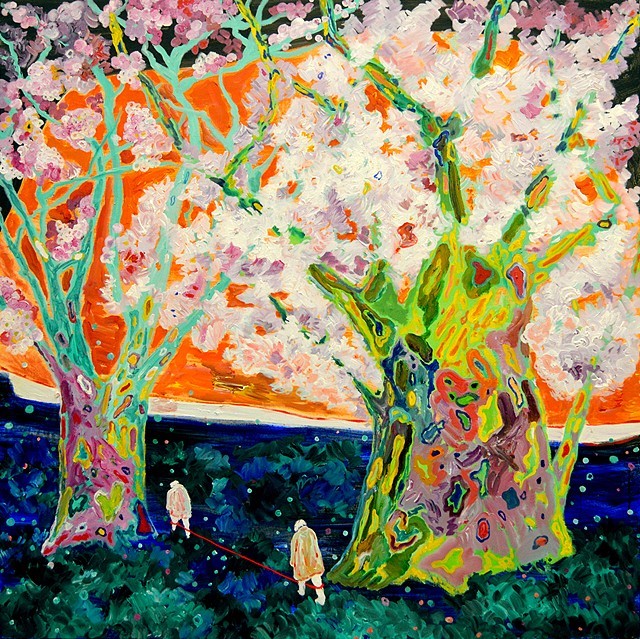
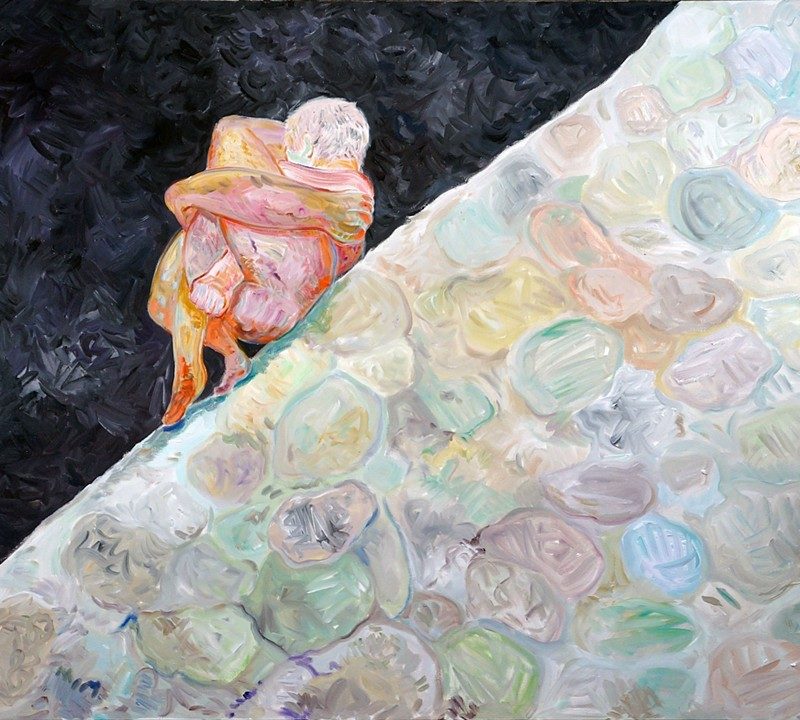
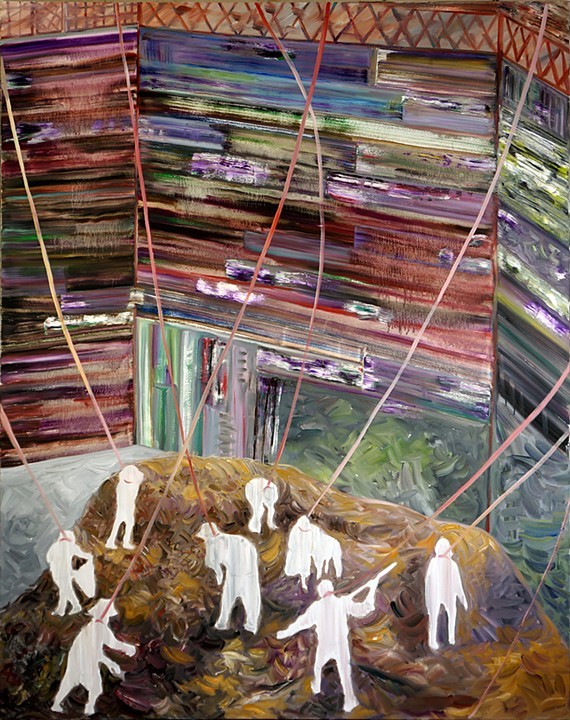
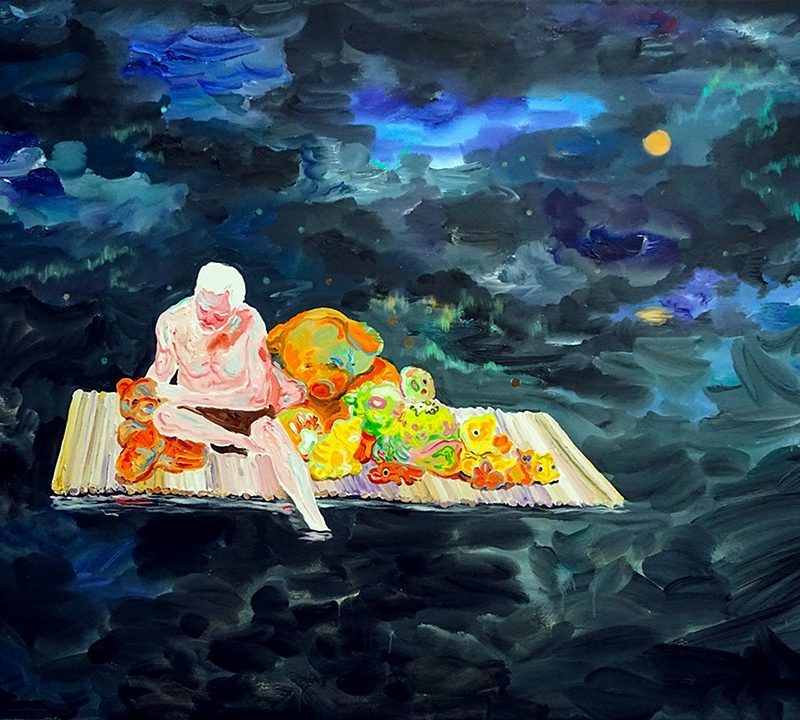
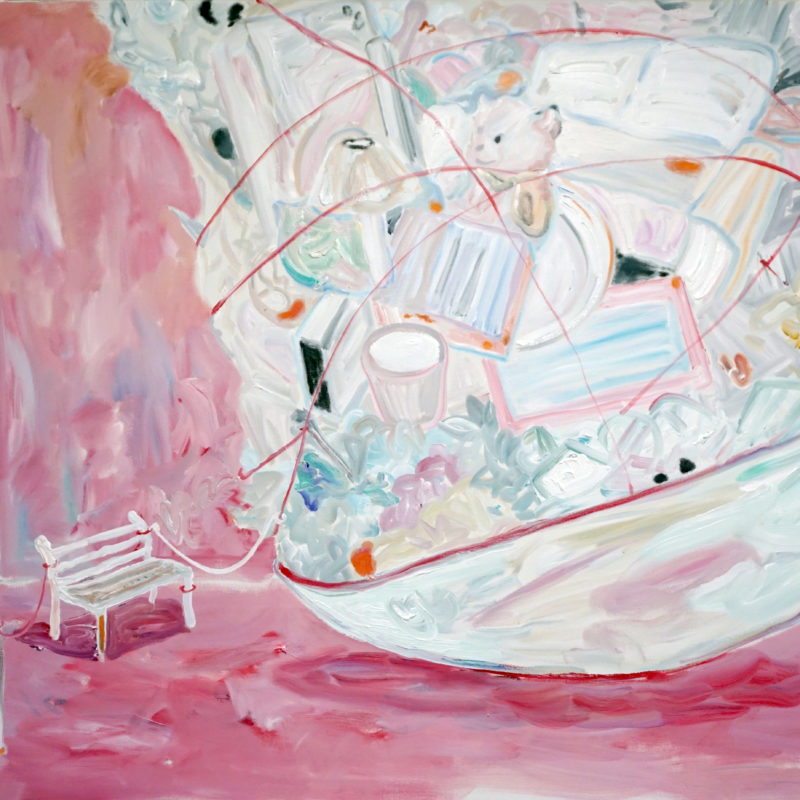
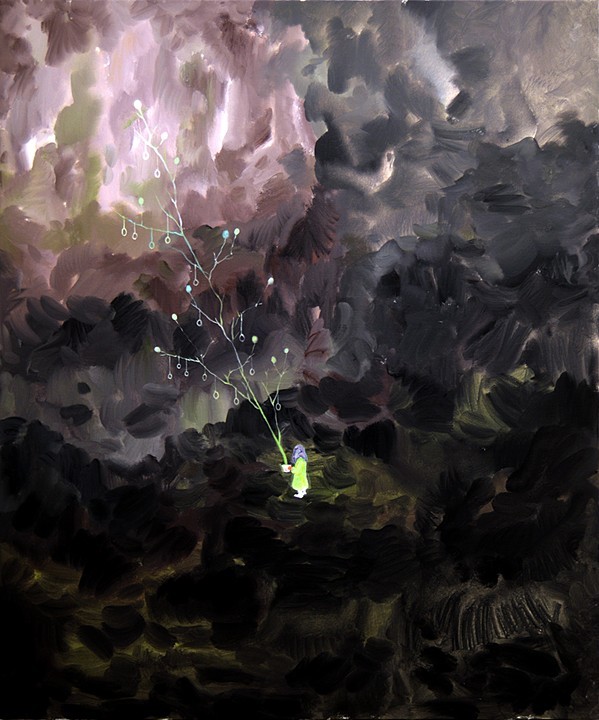
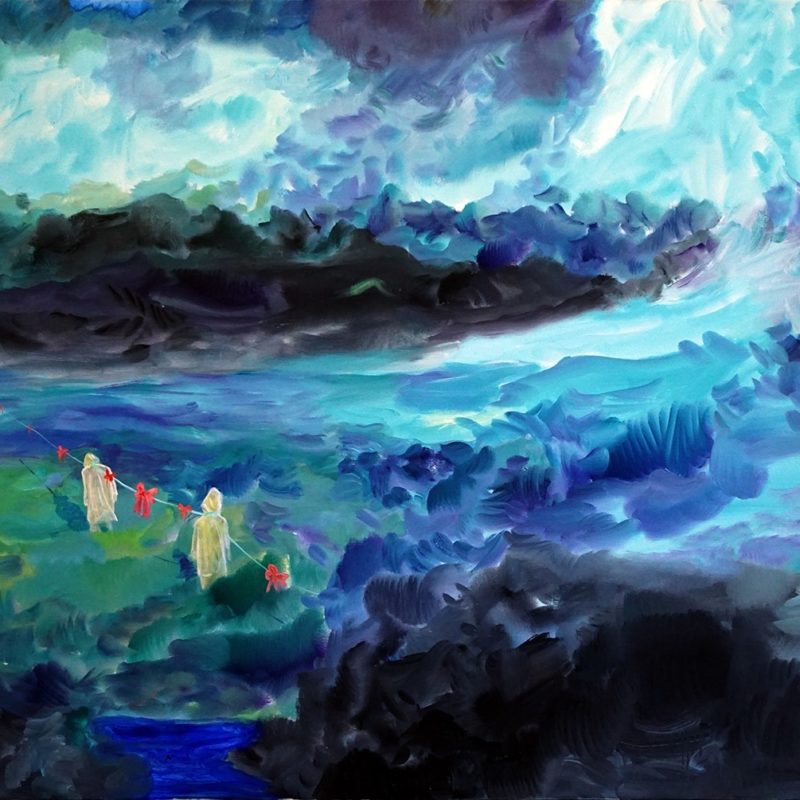
Xi Zhang’s recent paintings explore what it is to be human—to grow and evolve, to navigate relationships, and, often, to struggle. Placing his protagonists amid dream-like landscapes, reality becomes tangled with the complicated nature of how we perceive ourselves, others, and our surroundings. It is in these psychologically driven, often ambiguous narratives that Zhang compassionately depicts universal moments of struggle. Here, he aims to uplift the viewer—to inspire hope and let us know that we are not alone in moments of turmoil and tribulation.
Zhang’s work has been exhibited internationally, and featured in prominent news outlets and periodicals, among them CNN, PBS, NPR, and Juxtapoz.
Xi Zhang: Un batido de polvo de sueños
Las pinturas recientes de Xi Zhang exploran lo que es ser humano—crecer y evolucionar, navegar por las relaciones y, a menudo, luchar. Colocando a sus protagonistas en medio de paisajes de ensueño, la realidad se enreda con la naturaleza complicada de cómo nos
percibimos conscientemente y subconscientemente, a los demás y a nuestro entorno. Es en estas narraciones psicológicamente
impulsadas, a menudo ambiguas, que Zhang describe
compasivamente momentos de lucha. A través de estas pinturas,
espera elevar al espectador, recordándonos que no estamos solos en momentos de confusión y tribulación.
percibimos conscientemente y subconscientemente, a los demás y a nuestro entorno. Es en estas narraciones psicológicamente
impulsadas, a menudo ambiguas, que Zhang describe
compasivamente momentos de lucha. A través de estas pinturas,
espera elevar al espectador, recordándonos que no estamos solos en momentos de confusión y tribulación.
Creative Journeys
The Park City Professional Artists Association will present an interactive display of the best of Summit County local artists, their work, and creative explorations with accompanying stories, demos, and studio artifacts demonstrating the creative process. The makers in our community, who spend long hours making beautiful art, will display examples of their finished work. They will also engage the public by discussing and demonstrating process and technique as well as answering questions about the creative journey. The exhibition will visually represent the creative process in a variety of ways, including visual representations of the progression of stages their art progresses from concept to finished product and real-time demonstrations.
Demo Schedule
Tuesday, 12/3, 1-4pm • Carol Granger
Thursday, 12/5, 1-4pm • Nan Gray
Saturday, 12/7, 1-4pm • Karen Millar Kendall
Tuesday, 12/10, 1-4pm • Jenny Terry
Thursday, 12/12, 1-4pm • Richard Pick
Friday, 12/13, 2-5pm • Jenny Terry
Friday, 12/13, 5-8pm • Jeanne Hansen
Saturday, 12/14, 1-4pm • Corinne Humphrey & Mary Perry
Tuesday, 12/17, 1-4pm • Karen Millar Kendall
Thursday, 12/19, 1-4pm • Nan Gray & Karen Urankar
Saturday, 12/21, 1-4pm • Juanita Marshall
Tuesday, 12/24, 1-3pm • Anna Moore
Saturday, 12/28, 1-4pm • TBD
Thursday, 1/2, 1-4pm • Frances ReMillard
Friday, 1/3, 1-4pm • Ida Yoked
Saturday, 1/4, 1-4pm • Frances ReMillard
1401
Kimball Art Center’s creative journey will be on display in the Cafe Gallery. More than 50 local artists will be presenting small-scale pieces, each one a maximum size of 12 x 12″. Over the past four years, Kimball’s temporary home at 1401 Kearns Boulevard has been activated by the creative energies of hundreds of artists, from our teachers to our exhibiting artists to the artists who participate in the annual Monster Drawing Rally and more. In this exhibition, their work comes together in an exciting convergence of diverse styles, subject matter, and media.